Hidden Water Leak Detection in Lawrence, NJ
Professional water leak detection Lawrence NJ specialists pinpointing pressurized line breaches concealed behind walls, beneath subfloors, and inside finished ceilings. Avoid exploratory demolition—call our diagnostics team at (201) 510-1615.
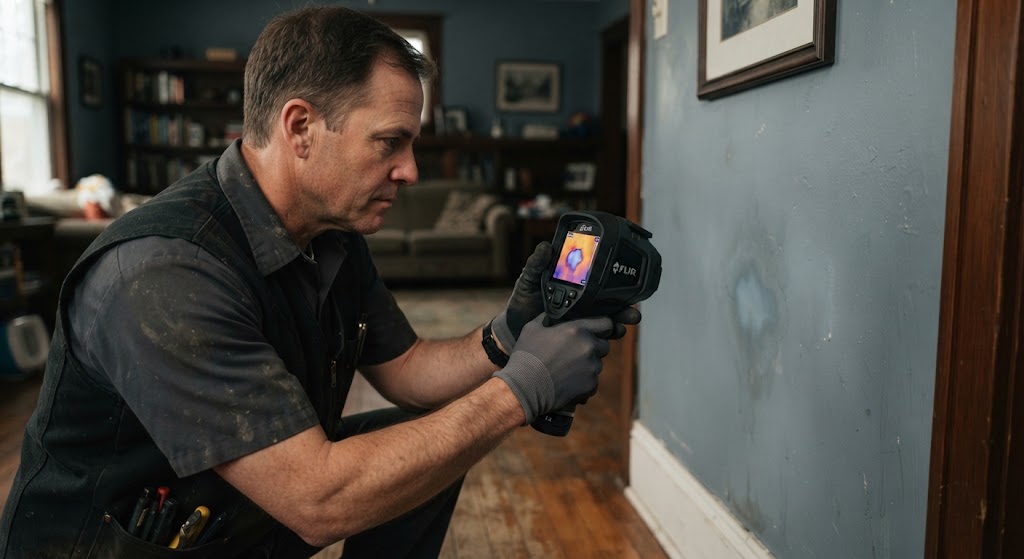
Electronic moisture mapping and acoustic testing in Lawrence, NJ.
Concealed Water Leaks in Lawrenceville, Slackwood, and Surrounding Homes
Concealed water leaks represent one of the most frustrating plumbing issues a homeowner can encounter. Across Lawrence Township—from historic homes in Lawrenceville to split-levels in Slackwood and newer subdivisions near the Princeton Pike corridor—water supply lines run through finished wall cavities, beneath second-story floors, and across insulated ceiling joists. When a slow pipe weep begins, water rarely emerges right at the failure point. Instead, it travels along studs, follows electrical conduits, and pools in hidden cavities.
Homeowners typically first suspect an issue when receiving an unexpected high water bill leak Lawrence NJ notification from their water utility, or when noticing unexplained humidity and faint mold odors. Left unresolved, hidden seepage rots wood framing, breeds black mold within insulation, and compromises drywall strength. Precision hidden water leak detection Lawrence pinpoints the source fast, preventing widespread damage.
Warning Signs of a Concealed Water Leak
Because pressurized supply lines are enclosed within building materials, look for these common warning signs:
Discolored Ceilings and Drywall Stains
Yellowish rings, bubbling paint, or softening sheetrock beneath upstairs bathrooms often indicate a weeping shower riser or cracked supply joint.
Water Meter Moving With Fixtures Off
Shut off all faucets, washing machines, and ice makers. If the leak indicator or low-flow triangle on your meter keeps spinning, pressurized water is escaping.
Persistent Musty Odor and Damp Air
A stubborn mildew scent in hallways, closets, or basements without visible puddles signals moisture accumulating inside wall framing.
Warm Floor Spots and Buckling Wood
Hot-water line seepage creates localized warmth under carpets, vinyl planks, or hardwood flooring, frequently causing floorboards to warp or cup.
Step-by-Step Non-Invasive Detection Method
When searching for a leak behind wall Lawrence properties cannot afford exploratory demolition. Our diagnostic methodology relies on multi-stage instrument testing:
- System Isolation & Pressure Testing: We isolate hot and cold water distribution branches with calibrated test gauges to confirm pressure loss and narrow the leak to a specific line.
- Thermal Imaging Scans: Infrared thermal cameras reveal minute surface temperature differentials created by warm or cool water migration behind drywall.
- Acoustic Contact Listening: Specialized acoustic listening discs and ground microphones capture the distinct frequency of pressurized water spraying or dripping against wall framing.
- Moisture Mapping: Non-penetrating electromagnetic moisture meters scan walls and floors to map moisture saturation boundaries without scratching finishes.
- Tracer Gas Detection: For complex, microscopic leaks, safe, non-toxic tracer gas is introduced and tracked with highly sensitive sniffer sensors.
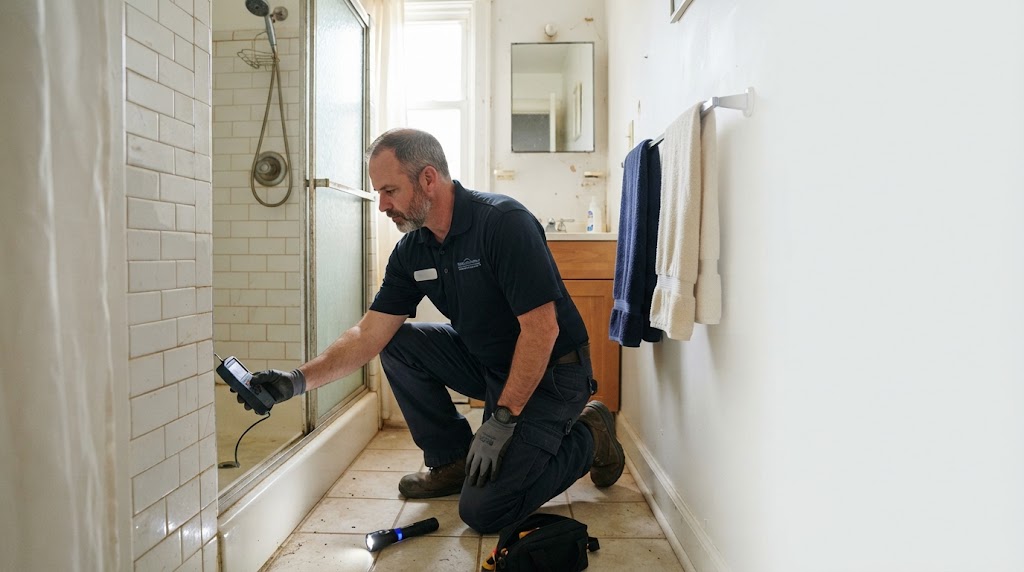
Seeing Moisture Stains or Hearing Hissing Behind Walls?
Do not let exploratory demolition destroy your finished drywall. Call our Lawrence leak detection specialists now for non-invasive pinpointing.
What Happens After the Leak Is Found: Repair Options & Cost Factors
Once our acoustic and thermal sensors isolate the exact breach footprint, your repair contractor knows precisely where to make a surgical opening—saving substantial sheetrock and tile restoration expenses. Repair paths vary depending on the pipe condition:
For isolated pinholes in accessible copper, a localized mechanical coupling or soldered replacement sleeve solves the problem. When corrosion is extensive across older piping, running a modern PEX bypass through existing wall chases or crawlspaces often provides a cleaner, longer-lasting solution than patching damaged sections repeatedly.
Repair costs depend on line accessibility (interior partitions versus exterior insulated walls), pipe material, whether ceiling scaffolding is required, and the extent of required structural dry-out. Pinpointing the breach upfront eliminates thousands in speculative demolition costs.
Prevention Tips & When a Hidden Leak Becomes an Emergency
Routine maintenance protects your plumbing lines: install a whole-house water pressure regulator to keep municipal pressure below 70 PSI, insulate supply lines in unheated exterior walls to prevent winter freezing, and inspect toilet flappers and shut-off valves annually.
If drywall begins sagging under the weight of accumulated water overhead, if water drips near electrical fixtures or circuit panels, or if ceiling plaster buckles, treat it as an immediate emergency. Shut off your main water valve, cut electricity to the zone, and call (201) 510-1615 immediately.
Where Hidden Leaks Occur in Lawrence & Related Services
Concealed leaks occur routinely throughout Lawrenceville, Slackwood, and residential communities along Princeton Pike and near Quaker Bridge Mall. For related plumbing concerns, explore our specialized services:
- Learn how we isolate foundation breaches with our slab leak detection services.
- Discover diagnostic testing for yard supply pipes with water line leak detection.
- Review complete piping fixes and repiping guidance on our pipe leak repair page.
- Return to our main overview of leak detection in Lawrence or explore our full service areas.
Frequently Asked Questions About Hidden Water Leaks
How do you locate a leak behind wall Lawrence cavities without demolition?
We combine sensitive acoustic ground and wall microphones with high-resolution infrared thermal imaging and non-invasive moisture meters. These tools detect sound frequencies and temperature differences from escaping water behind sheetrock, pinpointing the source without opening walls.
Can a high water bill leak Lawrence NJ issue happen without visible puddles?
Yes. Slow, continuous leaks often seep into crawlspaces, concrete footings, or floor insulation without creating puddles on living area surfaces. Even a pinhole leak of a quarter-gallon per minute wastes hundreds of gallons weekly and causes significant utility spikes.
What causes hidden water leaks in Lawrenceville and Slackwood homes?
Aging copper lines, shifting foundations, high water pressure, and failing brass fittings behind showers and vanities are prime causes. In winter, localized freeze cycles in unconditioned exterior walls can cause partial joint fractures that seep slowly once thawed.
What should I do if I notice mold smells or wet baseboards?
Shut off local fixture valves if identifiable, or turn off your main water valve to prevent continued saturation. Avoid poking holes into wet sheetrock, and call (201) 510-1615 for non-invasive acoustic and thermal diagnosis.
Pinpoint Your Hidden Leak in Lawrence Today
Protect your walls, ceilings, and floors from unnecessary demolition. Contact our Lawrence, NJ diagnostic team now to schedule an accurate, non-invasive inspection.