Pool Leak Detection in Lawrence, NJ
Accurate pool leak detection Lawrence NJ specialists using precision dye testing and hydrostatic pressure decay checks to locate pool shell and plumbing leaks. Find the source before opening walls or breaking concrete: (201) 510-1615.
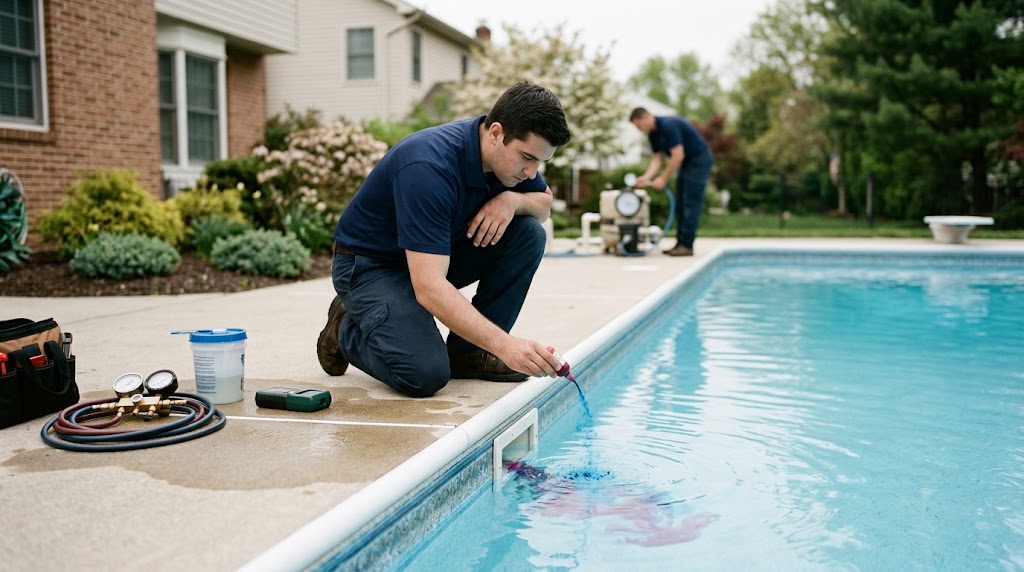
Dye testing and hydrostatic pressure decay checks for Lawrence, NJ pools.
Swimming Pool Leaks in Lawrenceville and Surrounding Communities
Backyard inground swimming pools are a centerpiece of outdoor living across Lawrence Township, from established properties in Lawrenceville to suburban developments near the Princeton Pike corridor and Quaker Bridge Mall area. However, maintaining swimming pool water levels in Mercer County can become a challenge when subterranean plumbing or structural shell components fail.
Central New Jersey experiences severe winter freeze-thaw cycles. When pools are closed, any water remaining in underground PVC return lines, skimmer throats, suction lines, or light niches can freeze and expand, fracturing fittings. When pools reopen in spring, owners often notice water levels dropping by inches every few days, forcing continuous auto-fill operation, diluting expensive pool chemicals, and threatening to erode soil beneath concrete pool decks.
Distinguishing between typical summer evaporation and an active inground pool leak Lawrence issue is the first step toward protecting your backyard investment.
Warning Signs of a Pool Leak & The Bucket Test
Before scheduling electronic line testing, Lawrence pool owners can perform the simple 24-hour bucket test to confirm if water loss exceeds evaporation:
The 24-Hour Bucket Test
Fill a bucket with pool water and place it on a pool step. Mark the water levels inside and outside the bucket with waterproof tape. If the pool water drops more than the bucket level after 24 hours, a leak is present.
Water Loss Exceeding 1/4 Inch Daily
Losing more than a quarter-inch of water per day in Central New Jersey during normal weather indicates an active plumbing or shell leak rather than evaporation.
Soggy Ground Around the Pool Deck
Pockets of spongy, muddy soil, wet pavers, or sinking concrete deck pads often point to an underground pressure return line leak beneath the deck.
Air Bubbles in Pump Basket or Return Jets
Persistent air churning through the pump strainer basket or surging from return eyeballs indicates an underground suction line leak pulling air into the system.
Step-by-Step Diagnostic Detection Method
Pinpointing an elusive pool plumbing leak Lawrence NJ requires systematic diagnostic procedures:
- Static Level Drop Analysis: We monitor whether water loss stabilizes at the skimmer mouth, return line fittings, or light niche level with the pump shut down.
- Hydrostatic Pressure Testing: Inflatable test plugs seal return lines, suction lines, and main drains. Calibrated gauges pressurize each loop with air or water to detect pressure drops.
- Precision Dye Testing: Specialized non-toxic contrasting dye is released around skimmer seams, vinyl liner faceplates, returns, and pool light conduit niches to visually track water draw.
- Underground Acoustic Microphones: Sensitive acoustic listening sensors trace pressurized bubbling frequencies along buried PVC lines beneath pool decking.
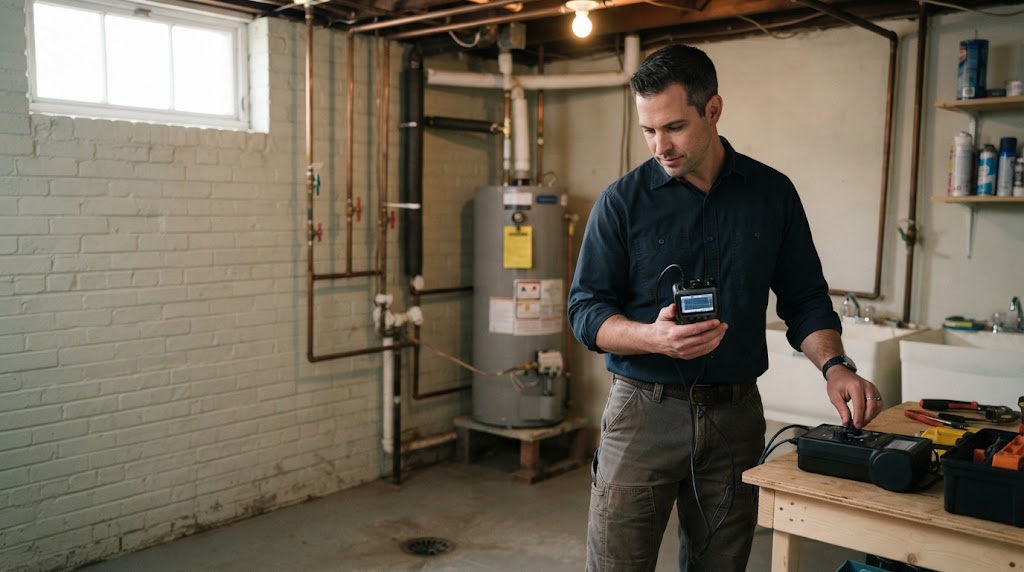
Losing Water in Your Lawrence Pool Every Day?
Stop wasting water and expensive treatment chemicals. Call our Lawrence pool leak diagnostic team for accurate dye and pressure testing.
What Happens After the Leak Is Found: Swimming Pool Leak Repair Lawrence
Once our diagnostic sensors pinpoint the exact failure point, you and your pool service company can execute targeted repairs:
- Skimmer & Light Niche Epoxy Sealing: Small cracks in plastic skimmer throats or light niche conduits can often be sealed underwater using two-part epoxy or specialized silicone without draining the pool.
- Targeted Deck Core Repair: If an underground return or suction line is fractured beneath concrete decking, contractors cut a small, surgical square through the deck directly above the leak, replace the cracked PVC fitting, and restore the deck.
- Underground Line Bypass: If a PVC run beneath heavily landscaped decking is extensively cracked, running a new line around the perimeter often preserves expensive hardscaping.
Repair costs vary based on whether the leak is in an accessible fitting, underwater light niche, vinyl liner patch, or buried deep under concrete. Accurately pinpointing the breach avoids unnecessary deck demolition.
Prevention Tips & When a Pool Leak Is an Emergency
Proper winterization is critical across Mercer County: blow out all underground water lines completely with high-volume air, add swimming pool non-toxic antifreeze, and install rubber freeze plugs with Gizzmo expansion bottles in skimmers before the first freeze.
A pool leak becomes an emergency if water loss undermines adjacent retaining walls, erodes subsoil supporting the concrete pool deck, or risks causing structural shell shifting. If deck cracking or rapid soil displacement is visible, shut off pool filtration equipment and call (201) 510-1615 immediately.
Common Neighborhoods & Related Services
Pool leak diagnostics are frequently requested across residential properties in Lawrenceville, Slackwood, and neighborhoods along Princeton Pike and near Quaker Bridge Mall. Explore our related diagnostic solutions:
- Learn about yard supply inspections on our water line leak detection page.
- Check out our diagnostic services for concealed indoor lines with hidden water leak detection.
- Review complete pipe repair choices on our pipe leak repair page.
- Return to our general leak detection in Lawrence page or browse our full service areas.
Frequently Asked Questions About Pool Leaks
How does the bucket test distinguish normal evaporation from a pool plumbing leak Lawrence NJ issue?
Place a bucket filled with pool water on the pool step, matching the interior and exterior water levels. After 24 hours of normal operation, if the pool water drops significantly faster than the bucket water, a real structural or plumbing leak exists rather than natural evaporation.
Why do inground pool leak Lawrence problems appear after New Jersey winters?
Severe Central New Jersey freeze-thaw cycles expand residual water trapped in underground PVC lines, skimmer throats, and light conduit niches, causing hairline fractures that become apparent when pools are opened in spring.
How do you test pool return lines, suction lines, and skimmers?
We isolate plumbing lines with inflatable test plugs and pressurize each run with air or water to monitor pressure drops. In the pool shell, we use targeted dye testing around skimmer gaskets, returns, main drains, and underwater light niches.
Does swimming pool leak repair Lawrence require excavating the entire pool deck?
No. Precision acoustic listening and electronic pipe tracing isolate the breach to a specific fitting or pipe segment, allowing targeted repairs through a small deck core rather than extensive concrete demolition.
Pinpoint Your Lawrence Pool Leak Today
Protect your pool deck and stop water waste. Call our Lawrence leak detection team to speak directly with a pool diagnostic technician.